


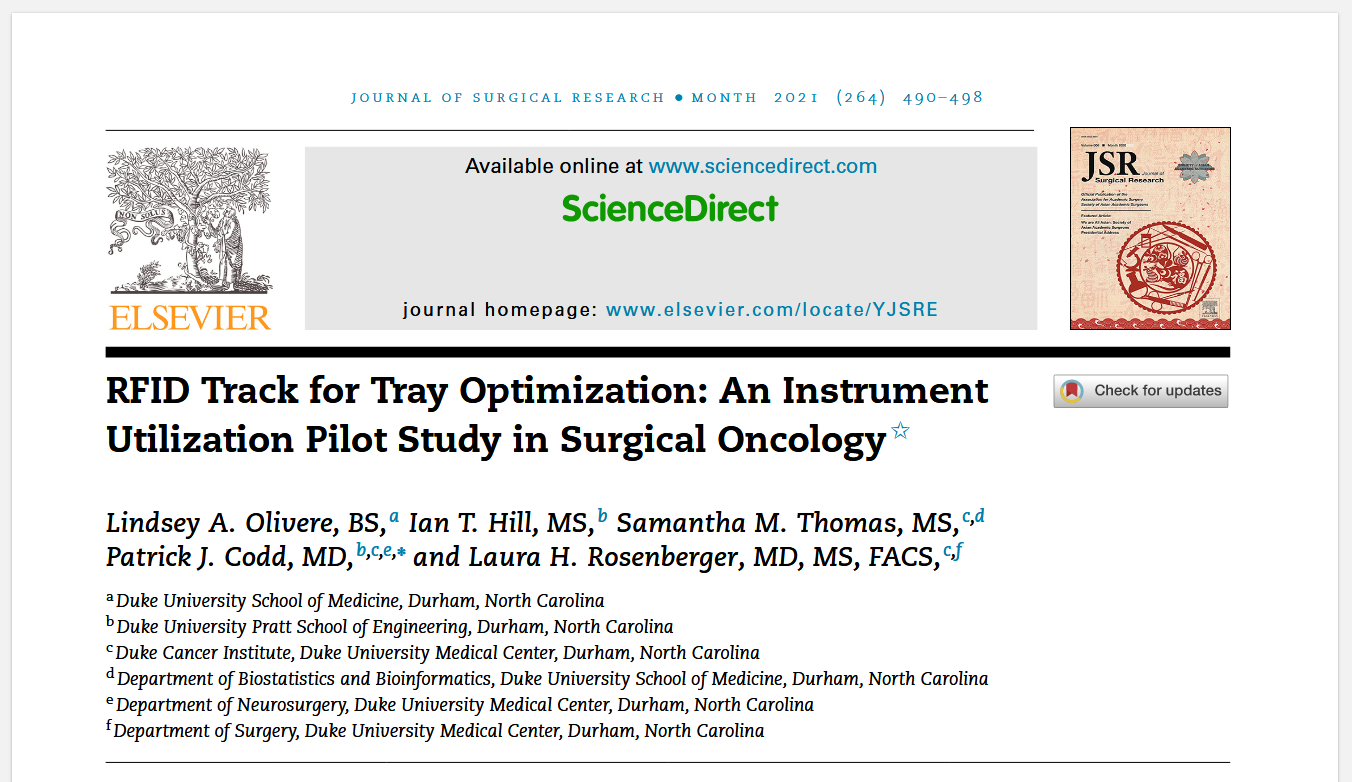
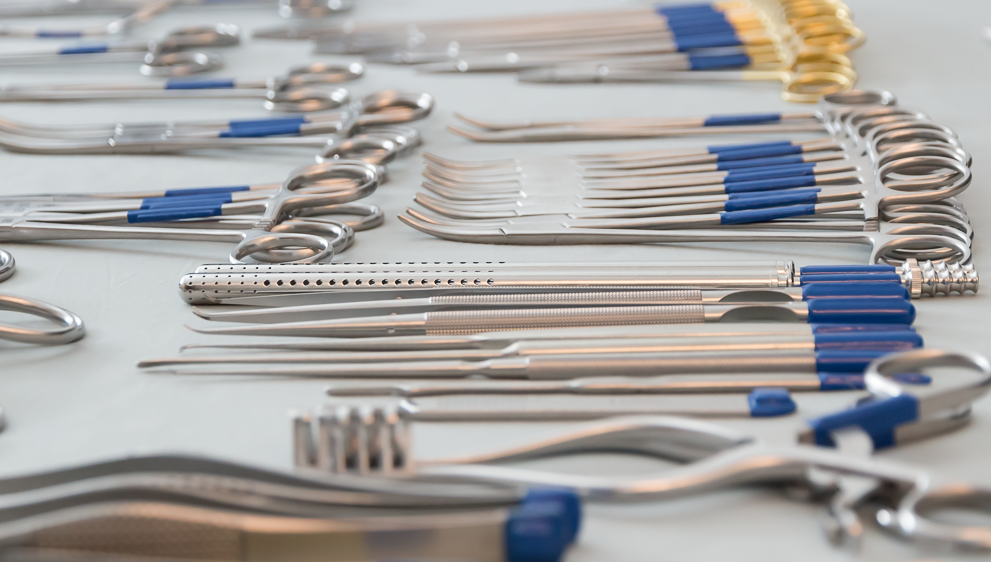
February 27, 2021 - Operating rooms carry more instruments than any single case will ever touch. The result is predictable: extra weight, extra counting, extra sterile processing, and extra chances for something to go missing, get damaged, or get delayed. Case-to-case, some of these instruments will be required; others, not so much. Our 2021 study asked a simple question: can we use intraoperative RFID data to make tray optimization faster, more objective, and easier to sustain?
In this pilot, we tagged instruments on a breast surgical oncology tray and captured intraoperative “use” via RFID antennas positioned to observe the surgical field. In parallel, a trained observer logged instrument use in real time. The goal was not to add new burden to perioperative teams, but to replace subjective memory and labor-intensive observation with a scalable data stream.
We tracked 15 cases using the standard tray. Any instrument that never registered as used across those cases was flagged as excess. Then we built a reduced tray and ran an additional set of cases using that reduced supply, with eliminated instruments still available if needed.
The result was a meaningful reduction in instruments with no observed need to “rescue” the case by pulling back eliminated tools. That matters because it’s the part of tray optimization that makes teams nervous: not the removal, but the moment when something is missing and trust evaporates.
We also saw signals that this can be done with a limited number of cases. New instruments added per case were rare, and use patterns were stable across the tracked cases. In other words, once you start capturing objective use data, you can move from “debate” to “decision” quickly.
This is less about saving a few instruments and more about removing friction from the system that surrounds every case:
A quote from Ian Hill, PhD, an author of the study and Mente's CTO:
Tray optimization usually struggles to cross this chasm between good intentions and measurable proof. RFID closes that gap by turning ‘I think we use this’ into ‘here’s the data.’
This study reflects the core idea behind Mente: hospitals should not need months of manual observation, endless committee meetings, or a one-time “spring cleaning” of trays that gradually creeps back. They need a repeatable, data-driven way to understand what’s actually used, align stakeholders around evidence, and keep improvements durable over time.
Mente is a surgeon-founded company building a data-driven operating room. We capture instrument usage automatically, then use that evidence to help hospitals and sterile processing teams supply fewer instruments while preserving clinical functionality and surgeon satisfaction.


© 2025 mente Inc. All right reserved.
