Interview with Dr. Robert Cerfolio: Tray Standardization in Thoracic Surgery; What it Looks Like at Executive Speed

Back to blog

Table of Contents
Subscribe to our newsletter
Thank you! Your submission has been received!
Oops! Something went wrong while submitting the form.

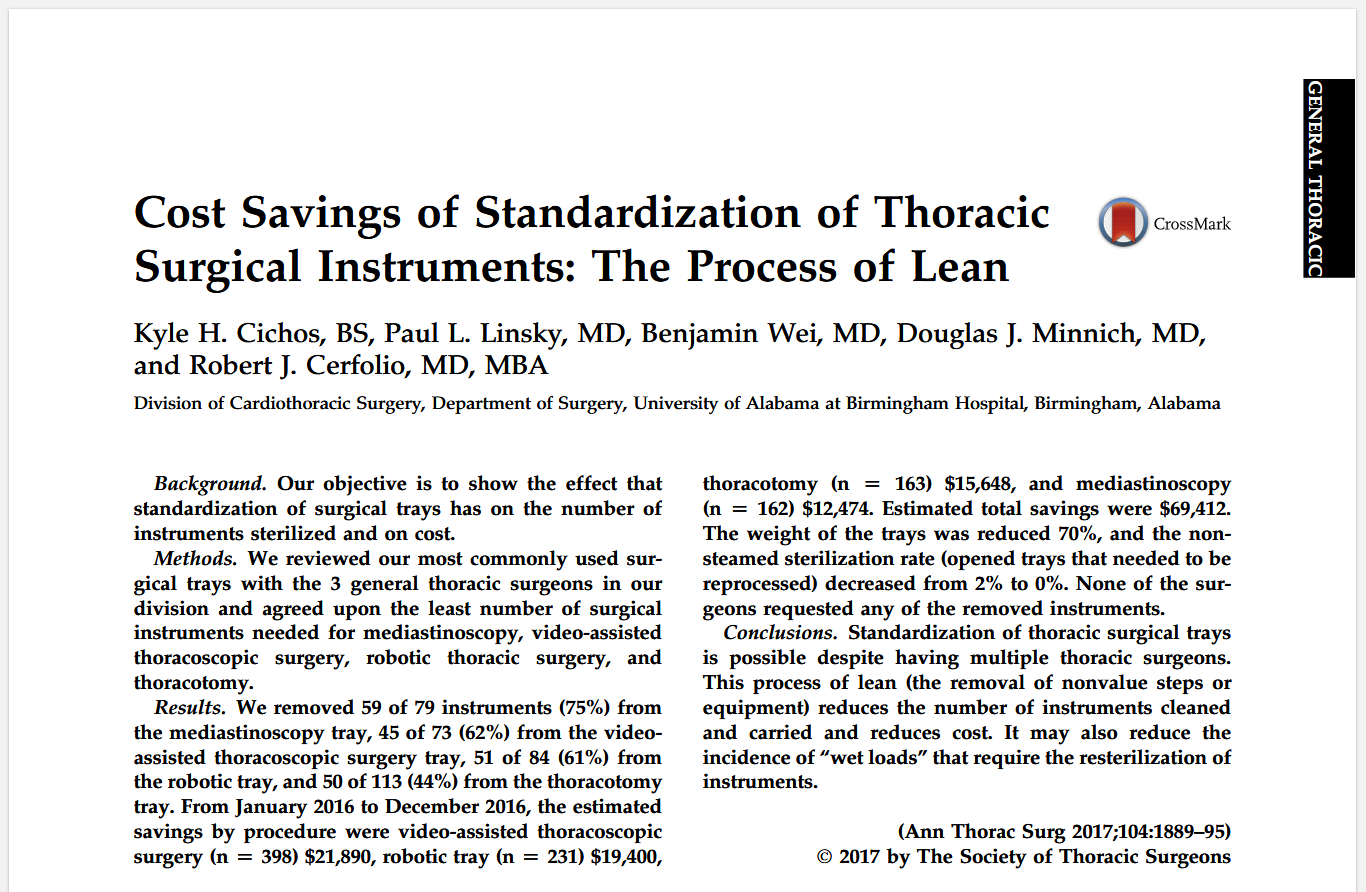
September 9, 2020 - Cichos et al. published a thoracic surgery instrument standardization study that is refreshingly direct: pick common trays, remove what is not needed, and measure the operational and cost impact. We followed up with Dr. Robert Cerfolio (senior author) by phone, and the conversation added a second storyline: what happens when the same idea moves from a service-line project to a health-system mandate.

This post is part of a short series that keeps the same structure each time: what the paper shows, what the conversation adds, a practical playbook, and how Mente makes it faster and longer-lasting.

What the Paper Showed

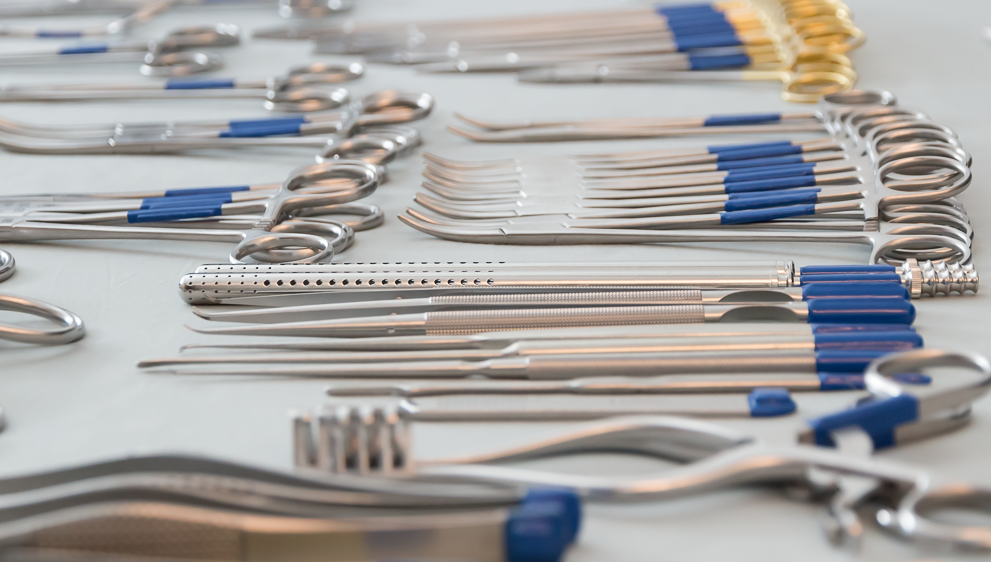
The paper focuses on four common thoracic procedure trays:mediastinoscopy, VATS, robotic thoracic surgery, and thoracotomy. Three thoracic surgeons reviewed the trays and agreed on the minimum instruments needed for safe execution. The process was intentionally simple: a tray was setup in a hallway, one surgeon removed the bulk of instruments deemed non-value,then the other surgeons reviewed and added back only what they felt was essential.

The outcomes were concrete:

  • Instrument counts dropped sharply across all four trays (roughly 44% to 75% removed, depending on the tray.
  • Estimated annual savings across the four tray types was about $69k for one year of cases, using a conservative per-instrument processing cost assumption.
  • Tray weight dropped substantially.
  • “Wet trays” (opened and found wet, requiring reprocessing and potentially delaying cases) dropped from a small but real baseline rate to zero during the study period.
  • Most tellingly, none of the surgeons requested any of the removed instruments during the year studied.

It is a surgeon-driven “lean” story: reduce non-value steps and equipment, cut recurring reprocessing work, and eliminate avoidable friction in the room.

What we Found in the Interview

Ourphone call with Dr. Cerfolio was short and fast, but it surfaced implementation details that do not show up cleanly in a publication:

To repeat Koyle-style results, you want a repeatable approach for any service line, here’s our takeaway:

  • The approach was intentionally top-down. He described making changes decisively and moving forward, rather than aiming for broad consensus-building first.
  • He framed the benefit less as “do more cases” and more as a wellness and dignity argument: minutes saved on setup and handling translate into people getting home earlier.
  • He emphasized prioritization: start with the most common procedures in a service line, and cross-reference with those that matter financially.
  • He described “creep” as inevitable: instruments slowly find their way back onto trays, so you need a recheck cadence (he mentioned roughly every six months),even if you do not have perfect tracking for why creep happened.
  • He noted a measurement blind spot: peel packs and ad hoc opens are hard to track without a dedicated system, which makes it harder to quantify the true exception burden over time.
  • After moving into an executive role, he described rolling similar expectations out quickly across a broader health system by making tray reduction a leadership mandate. He suggested the savings at that scale were much larger, but he did not have published numbers to point to.

If Koyle’s story is “earn trust, instrument-by-instrument,” Cerfolio’s story is“set direction, remove waste, enforce rechecks.” Koyle’s pediatric hernia tray work reads like consensus engineering: observation-heavy measurement, explicit balancing measures, and repeated stakeholder engagement. Cerfolio’s thoracic paper is closer to decisive surgical minimalism: surgeon review, rapid reduction, and straightforward operational endpoints like cost and wet trays.

That contrast matters because it reveals two different failure modes:

  1. Consensus-first approaches can stall on measurement labor and stakeholder coordination.
  2. Mandate-first approaches can succeed quickly, but they are vulnerable to drift unless measurement and governance are continuous.

Both paths converge on the same lesson: standardization is not a one-time event. It is a system that either keeps measuring and correcting, or slowly re-inflates.

To replicate Cerfolio-style results:

  • Pick your first trays strategically. Start with high-volume procedures, and if you are trying to fund expansion, prioritize those with meaningful margin impact.
  • Run a structured “tray teardown.” Physically lay out the tray, remove aggressively, and make “add-back” the default behavior rather than“keep everything just in case.” Limit the review window to days, not weeks, to avoid decision fatigue.
  • Define your safety net up front. Decide how exceptions will be handled so the team feels protected. Peel packs, an add-on micro-tray, or a clearly defined backup policy all work better when they are explicit.
  • Measure what the room feels. Cost matters, but so do the operational annoyances that drive adoption: wet trays, counting time, set-up complexity, and staff fatigue.
  • Install a recheck cadence. Assume creep will happen. Put a calendar on it and name an owner.
  • Make scaling a leadership decision. If you want this across a service line or system, treat it as a reliability initiative with deadlines, not a “nice-to-have” side project

How Mente Helps

Cerfolio’s paper and our conversation both point at the same constraint from different angles: you can remove instruments quickly, but keeping trays lean over months and years requires visibility.

Two things are consistently hard to track without infrastructure:

  1. What instruments are truly being used, by procedure and by surgeon, at scale.
  2. Where exceptions and creep are coming from, including peel packs, ad hoc opens, and gradual preference card inflation.

Mente is built for that long game. By capturing instrument usage automatically, hospitals can reduce the dependence on manual observation,quantify outliers without politics, and detect drift early before it becomes the new normal. That turns “recheck every six months” from a painful reset into a routine, data-driven tune-up.

In other words, Cerfolio shows what decisive leadership can do quickly. Mente helps make sure the result stays true after the decisive leader is no longer in the room. Mente can also enable health systems to engage in this work from an administrative level without the requirement for a decisive surgeon leader to kick off the study.

About Mente

Mente is a surgeon-founded company building a data-driven operating room. We capture instrument usage automatically, then use that evidence to help hospitals and sterile processing teams supply fewer instruments while preserving clinical functionality and surgeon satisfaction.

Related articles

What We Heard in 100+ Perioperative Interviews

Lessons from 100+ hospital interviews on how to run tray optimization that scales: get real usage data, design exception pathways, and maintain improvements with ongoing measurement.
Read More

RFID Tray Optimization in Breast Surgery: A Practical Path to Leaner Trays

In a breast surgery pilot, we used intraoperative RFID tracking to identify unused instruments and reduce a surgical tray without compromising case readiness. The study shows how objective use data can make tray optimization faster, repeatable, and easier to sustain.
Read More

Mente Surround Tags Complete Automated Cleaning Validation Study

HIGHPOWER VTLS demonstrated that Mente tags do not harbor bioburden and are cleanable through standard, automated washer processes per the instrument manufacturer IFU.
Read More